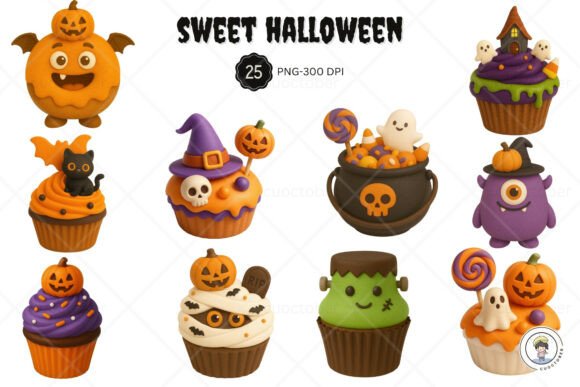
Mastering 3D Halloween-themed Sweets and Desserts for Professional Print Projects
The intersection of seasonal creativity and digital design offers a unique opportunity for creators to stand out during the autumn months. 3D Halloween-themed Sweets and Desserts have become a focal point for designers looking to add depth and realism to their projects. Whether you are creating custom merchandise, marketing materials, or personal crafts, understanding the nuances of these high-quality assets is crucial. Many enthusiasts dive into this niche without fully grasping the technical requirements, leading to disappointing results. This guide aims to clarify common pitfalls and provide actionable advice to ensure your creative output meets professional standards.
Understanding the Value of High-Resolution Assets
When we discuss 3D Halloween-themed Sweets and Desserts, we are referring to digitally rendered images that mimic the texture, lighting, and volume of real confections. These are not flat illustrations; they are complex compositions designed to pop off the page or screen. The specific set in question includes 25 PNG files with Transparent Background and 25 JPG files with White Background, all rendered at 3000×3000 px, which translates to 10″X10″ at 300 DPI.
Why does this matter? For beginners, the distinction between a standard web image and a print-ready file is often overlooked. A common mistake is assuming that any image found online can be scaled up indefinitely. In reality, using low-resolution files for physical products results in pixelation and blurriness. By starting with assets that are already optimized at 300 DPI, you eliminate the guesswork and ensure crisp, clean lines on every medium, from fabric to paper.
Common Mistakes in File Selection and Usage
One of the most frequent errors creators make is ignoring the background format required for their specific application. The inclusion of both PNG and JPG formats in this collection is intentional, yet many users fail to leverage this versatility.
- Misusing JPGs for Layered Designs: JPG files come with a white background. If you attempt to place a JPG of a 3D cupcake onto a dark-colored t-shirt without removing the background, you will end up with an unsightly white box around your design. This looks amateurish and detracts from the 3D effect.
- Overlooking Transparency in PNGs: Conversely, PNG files with transparent backgrounds are essential for overlaying designs on colored surfaces. However, some users accidentally save these as JPGs during editing, which reintroduces the white background and defeats the purpose of having a transparent asset.
- Ignoring Color Profiles: While the files are high resolution, failing to check color profiles can lead to discrepancies between what you see on screen and the final printed product. This is particularly relevant for vibrant Halloween colors like neon greens and deep purples.
To avoid these issues, always verify the file type before beginning your design process. Use PNGs for any project where the design needs to blend seamlessly with the substrate, such as t-shirts, bags, or mugs. Reserve JPGs for projects where a white background is acceptable or desired, such as certain types of cards or frame artwork intended for light-colored walls.
Compatibility and Printing Techniques
This design set is compatible with a wide range of printing methods, including sublimation, digital printing transfer, DTG (Direct to Garment), Screen Printing, and even event ink jet transfer. However, compatibility does not guarantee identical results across all methods. A significant misunderstanding among small business owners is treating all printing techniques as interchangeable.
For instance, sublimation works best on polyester fabrics and requires heat to bond the ink to the material. The vibrant colors of 3D sweets translate beautifully here, but only if the design is mirrored correctly before printing. On the other hand, DTG prints directly onto cotton, offering a softer feel but potentially different color saturation. If you use the same file settings for both without adjustment, you may find that the details in the 3D rendering get lost in the fabric weave of a DTG print, while appearing sharp on a sublimated mug.
Screen printing presents another challenge. Since it uses layers of ink, highly detailed 3D gradients may need to be simplified or separated into distinct color layers to remain cost-effective and clear. Ignoring these technical constraints can lead to increased production costs and wasted materials.
Practical Applications Beyond Apparel
While t-shirts are a popular choice, limiting these assets to clothing is a missed opportunity. The 3D Halloween-themed Sweets and Desserts are equally effective for home decor and stationery. Consider using them for scrapbooks to add a tactile, realistic element to memory keeping. The high resolution ensures that even when printed small for stickers or embellishments, the details remain sharp.
For educators and parents, these images can enhance classroom decorations or party invitations. The realistic nature of the 3D renders makes them engaging for children and adults alike. When creating stickers, ensure you use a printable vinyl sheet compatible with your inkjet printer to maintain durability and water resistance.
Checklist Before You Buy or Print
Before committing to a large print run or purchasing additional software, take a moment to evaluate your workflow. Here are key points to consider:
- Verify Dimensions: Confirm that 10″X10″ at 300 DPI meets the size requirements of your product. For larger items, you may need to tile the image or use it as part of a larger pattern.
- Test Print: Always perform a test print on a similar material to your final product. This helps identify any color shifts or detail loss specific to your printer and ink combination.
- Check Licensing: Ensure that your intended use aligns with the license provided. While this set is designed for commercial applications like sublimation products, always double-check terms for mass production limits.
- Software Compatibility: Make sure your design software can handle high-resolution PNGs with transparency. Older versions of some programs may struggle with large file sizes, leading to lag or crashes.
By paying attention to these details, you transform a simple download into a professional-grade asset. The goal is to create products that delight customers and reflect your skill as a creator. Have a nice shopping experience, and remember that preparation is the key to successful design execution. Whether you are a freelancer looking to expand your portfolio or a hobbyist creating gifts, mastering these technical aspects will elevate your work from good to exceptional.