Valentine Bunny DIY 3D Papercraft
In the saturated landscape of Valentine’s Day marketing and home décor, standing out requires more than just standard red hearts and generic greeting cards. Consumers and creators alike are searching for experiences that offer tangible value, emotional resonance, and a touch of whimsy. This is where the Valentine Bunny DIY 3D Papercraft from PolyFold3D enters the conversation. It is not merely a decoration; it is an interactive design object that bridges the gap between digital precision and physical craftsmanship. For designers, hobbyists, and small business owners, understanding the appeal of such a model offers insights into current trends in experiential gifting and spatial branding.
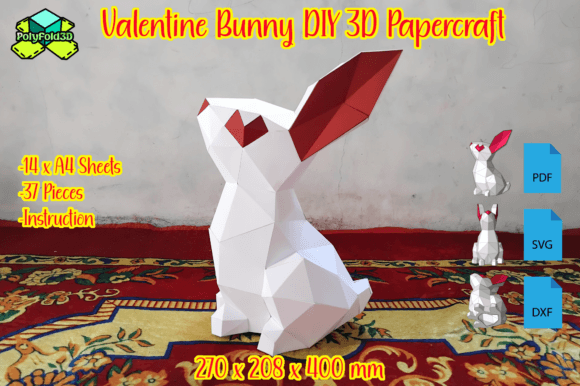
The model itself is a study in charming minimalism. Standing at an impressive 270 x 208 x 400 mm, the bunny commands attention without overwhelming a space. Its visual identity is defined by a stark, clean contrast: a pristine white body paired with distinct, vibrant red ears. This color blocking is a deliberate design choice that echoes modern graphic design principles, ensuring the figure reads well from a distance while maintaining intricate detail up close. The personality of the piece is approachable and romantic, yet sophisticated enough to fit into contemporary interior design schemes that favor clean lines and playful accents.
The Intersection of Craft and Digital Design
While this article focuses on a physical papercraft model, the principles behind its creation and appeal are deeply rooted in typography and graphic design workflows. Just as a designer selects a premium font to convey a specific brand voice, the creator of this papercraft has chosen geometric forms and precise cut lines to communicate quality and care. The process of assembling the 37 individual pieces mirrors the meticulous nature of typesetting or layout design. Each fold and tab must align perfectly, much like how kerning and leading must be adjusted to ensure optimal readability in editorial design.
For professionals in web design and social media graphics, the Valentine Bunny serves as a powerful prop. In an era where flat digital assets can feel ephemeral, photographing a three-dimensional, hand-assembled object adds texture and authenticity to content. It signals to the audience that time and effort were invested, enhancing brand identity through perceived value. Whether you are a blogger creating a "DIY Gift Guide" or a marketer launching a seasonal campaign, incorporating tactile elements like this papercraft can significantly boost engagement rates. It transforms passive viewing into an aspirational activity, encouraging users to imagine themselves building the piece.
Technical Precision and User Experience
The success of any DIY project hinges on the clarity of its instructions and the quality of its source files. The Valentine Bunny DIY 3D Papercraft excels in this regard by providing a comprehensive suite of digital assets. The package includes 14 A4 sheets with precisely laid-out patterns, ensuring that material waste is minimized—a key consideration for both eco-conscious consumers and cost-effective small businesses. The inclusion of a detailed Instruction PDF guides the user through the assembly of the 37 individual pieces, reducing frustration and ensuring a professional-looking finish.
From a technical standpoint, the file formats provided cater to a wide range of users. The PDF format is ideal for those who prefer manual cutting with craft knives or scissors, offering a low-barrier entry point for beginners. However, the inclusion of SVG and DXF files opens the door for more advanced makers using laser cutters or digital die-cutting machines. This versatility is crucial for packaging design professionals and prototypers who rely on vector-based workflows. The precision of these vector files ensures that every curve and angle is reproduced accurately, maintaining the structural integrity of the final model. This attention to detail reflects the same rigor required when selecting a commercial font for large-scale printing, where legibility and consistency are non-negotiable.
Strategic Applications for Creatives and Brands
How can this specific papercraft model integrate into broader creative strategies? Consider the concept of font pairing in design. Just as a bold display font might be paired with a subtle sans serif font to create visual hierarchy, the Valentine Bunny can be paired with other décor elements to create a cohesive thematic display. Its white body acts as a neutral canvas, allowing it to complement various color palettes, while the red ears provide a focal point similar to an accent color in a brand guideline.
For small business owners, particularly those in the gift or lifestyle sector, offering a kit like this—or using it as part of a window display—can differentiate your brand. It moves beyond transactional commerce into the realm of community building. Hosting a workshop centered around assembling these bunnies can drive foot traffic and foster loyalty. Similarly, for content creators, the process of building the model provides rich material for time-lapse videos, tutorials, and behind-the-scenes content, which perform exceptionally well on platforms like Instagram and TikTok.
The scale of the model (400 mm tall) makes it suitable for shelf displays, desk accessories, or even as a centerpiece for intimate dining settings. Its presence suggests a thoughtful curation of space, appealing to audiences who value modern typography and clean aesthetics in their physical environments. It avoids the cloying sentimentality often associated with Valentine’s Day, opting instead for a stylish, design-forward interpretation of love and care.
Evaluating Fit and Execution
When considering the Valentine Bunny DIY 3D Papercraft for your next project, evaluate it against your specific goals. If you are looking for a quick fix, this may require more time than a pre-made decoration. However, if your goal is engagement, storytelling, or creating a unique gift that stands out, the investment in assembly yields high returns. Test the paper weight recommended for the printouts; heavier cardstock will provide better structural stability, much like choosing a bold weight for a headline typeface ensures impact.
Furthermore, consider the lighting conditions where the model will be displayed. The white surfaces will reflect light, potentially brightening a corner, while the red ears will absorb it, creating depth. This interplay of light and shadow adds a dynamic quality to the object, making it visually interesting from multiple angles. For photographers, this offers opportunities to play with contrast and composition, enhancing the visual appeal of any accompanying marketing materials.
Ultimately, this papercraft model is a testament to the enduring appeal of hands-on creativity in a digital world. It combines the precision of vector design with the warmth of manual craft, resulting in an object that is both visually striking and emotionally engaging. Whether used as a personal project, a professional prop, or a commercial product, the Valentine Bunny offers a fresh perspective on how we celebrate connection and design.